Choosing the Right Skylight Blinds for Your Central DuPage Home
If you have skylights in your Central DuPage home, you already know they create two distinct problems: precious heat escaping through the glass during those bitter DuPage County winters when Nicor Gas bills climb, and unbearable upper-floor temperatures when summer sun pours directly through angled glass. The solution is custom-fitted skylight blinds designed specifically for your window angles, but choosing the right type matters as much as choosing to install them at all.
Skylight blinds in Central DuPage must handle extreme seasonal swings. A split-level home near Lisle Benedictine or a contemporary cathedral-ceiling design in Naperville North needs window treatments that insulate against cold, block intense summer rays, and fit precisely into non-standard frames. Made in the Shade Central DuPage specializes in measuring, sourcing, and installing skylight shades that solve these exact challenges for local homeowners.
This guide walks you through the main skylight blind options, compares their trade-offs side by side, and helps you identify which choice makes the most sense for your home’s architecture and your comfort goals.
Cellular Skylight Shades: The Energy-Efficiency Champion
How Honeycomb Construction Works in Skylights
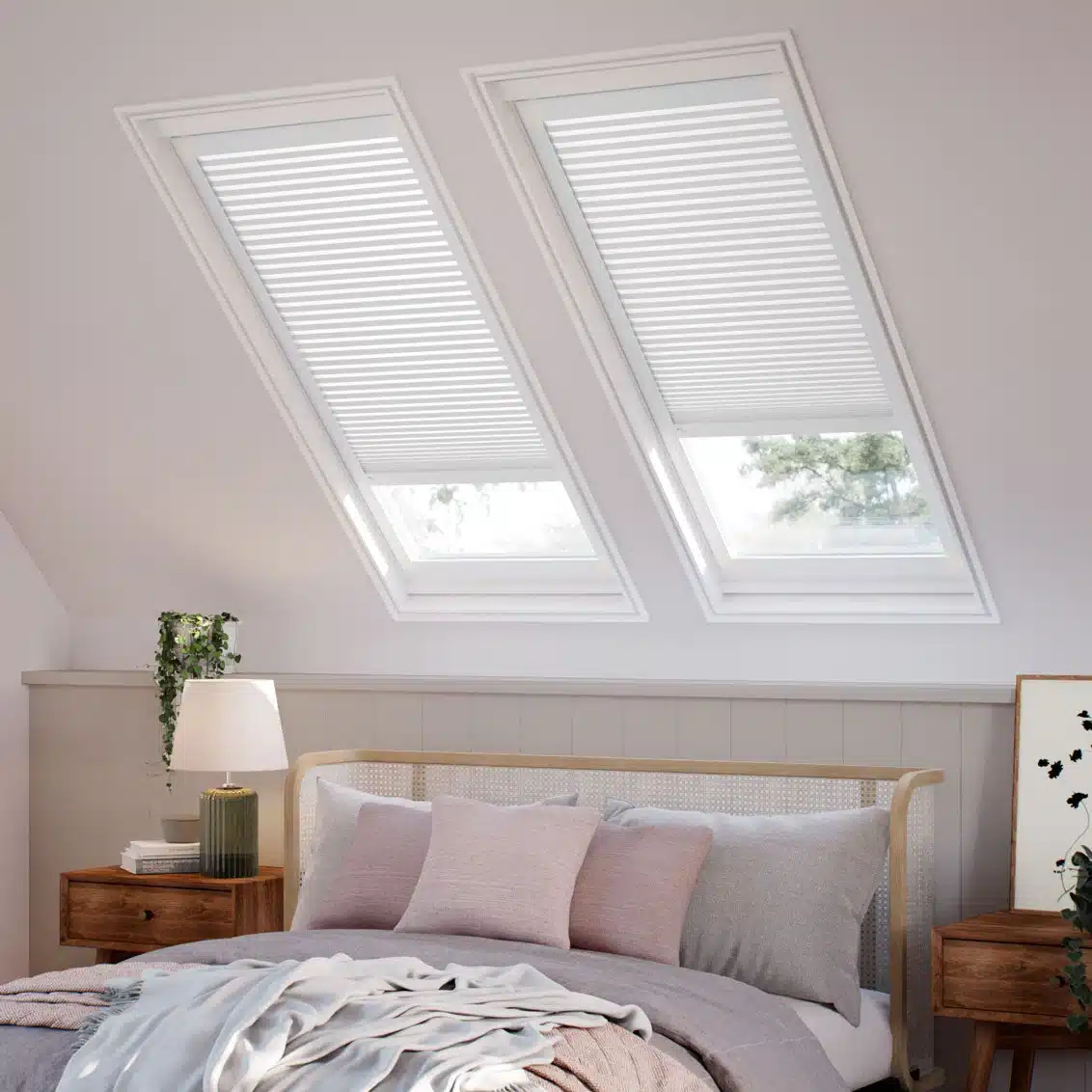
Cellular shades (also called honeycomb shades) trap air in fabric pockets, creating a barrier between your interior and the glass. In a skylight application, this trapped-air layer reduces both winter heat loss and summer heat gain more effectively than single-layer alternatives. The honeycomb cells come in single, double, or triple layers, with more layers providing greater insulation.
For Central DuPage homeowners watching Nicor Gas bills spike each January, cellular skylight shades offer meaningful savings. The insulating effect is especially pronounced in cathedral ceilings where warm air naturally rises and escapes through overhead glass.
Light Control and Privacy Considerations
Cellular shades come in light-filtering and room-darkening fabrics. Light-filtering options soften harsh sunlight while preserving ambient glow, ideal for living rooms with skylights overlooking Herrick Lake Forest Preserve. Room-darkening versions block nearly all light, which works better for bedrooms or media rooms.
- Best for: Homeowners prioritizing energy savings and year-round comfort
- Trade-off: Higher upfront cost than roller shades
- Ideal rooms: Bedrooms, home offices, great rooms with cathedral ceilings
Roller Skylight Shades: Sleek and Budget-Friendly
Clean Aesthetics for Contemporary Homes
Roller shades offer a minimalist profile that complements the contemporary architecture common throughout Central DuPage. When retracted, they nearly disappear into a slim headrail. When extended, they provide a smooth, uniform appearance that suits modern design sensibilities.
Solar roller fabrics filter light while reducing glare and UV exposure. These fabrics come in varying openness factors (typically ranging from 1% to 14%), letting you balance view preservation against sun control. A 3% openness fabric, for example, blocks most glare while still allowing you to see trees and sky through your skylight.
Limitations in Extreme Temperatures
Roller shades insulate less effectively than cellular options because they lack the air-trapping honeycomb structure. If your primary concern is slashing winter heating costs or preventing your upstairs from becoming unbearable in July, cellular shades deliver better thermal performance.
- Best for: Homeowners wanting a modern look at a moderate price point
- Trade-off: Less insulation than cellular alternatives
- Ideal rooms: Kitchens, hallways, contemporary living spaces
Velux and Manufacturer-Specific Blinds: Precision Fit Guaranteed
Why Brand-Matched Products Matter
Many Central DuPage homes, especially split-levels built in the 1980s and 1990s, feature Velux skylights. Velux blinds DuPage homeowners request are engineered to snap directly into Velux frames without drilling or custom brackets. This precision fit ensures smooth operation and a clean finished look.
Other skylight manufacturers offer similar brand-matched options. When your skylight has a specific brand and model number, manufacturer-designed blinds often provide the simplest installation path and the best long-term performance.
When Custom Fabrication Beats Stock Products
Not every skylight fits a standard manufacturer mold. Older homes near the DuPage County Fairgrounds sometimes have custom-built skylights or unusual angles that require fully custom fabrication. Made in the Shade Central DuPage handles both scenarios, matching you with manufacturer blinds when appropriate and sourcing custom solutions when your skylights demand them.
- Best for: Homes with Velux or other major-brand skylights
- Trade-off: Limited fabric and color options compared to fully custom shades
- Ideal situations: Standard-size skylights with known brand and model numbers
Motorized vs. Manual Operation: Which Makes Sense for Your Skylights?
The Practicality Factor in Hard-to-Reach Windows
Skylights are, by definition, overhead. In a cathedral ceiling that soars 15 or 20 feet, manually adjusting shades with a telescoping pole becomes impractical quickly. Motorized skylight shades solve this with remote control, wall switches, or smartphone integration. Some systems even connect to smart home platforms, allowing you to program schedules or link shade movement to temperature sensors.
Cost and Maintenance Realities
Motorized systems cost more upfront and include components (motors, batteries, or wiring) that may eventually need service. For skylights you can reach easily, manual options with cords or poles work reliably for years with minimal maintenance. Your ceiling height and how often you want to adjust your shades should drive this decision.
For Central DuPage homeowners with multiple skylights in a vaulted great room, motorization often pays for itself in convenience alone. Adjusting four or five overhead shades with a single button press transforms daily comfort management.
Comparing Your Options: Skylight Blinds Decision Table
The following table summarizes the key trade-offs to help you narrow your choice before scheduling your professional measurement:
| Shade Type | Insulation | Light Control | Relative Cost | Best Application |
|---|---|---|---|---|
| Cellular (Honeycomb) | Excellent | Light-filtering or blackout | Higher | Energy savings, bedrooms |
| Roller (Solar Fabric) | Moderate | Glare reduction, view-through | Moderate | Contemporary aesthetics |
| Velux/Manufacturer-Specific | Varies by fabric | Varies by fabric | Moderate to Higher | Matching existing skylight brand |
| Motorized Add-On | Depends on shade type | Depends on shade type | Additional cost | Hard-to-reach installations |
The Best Choice for Most Central DuPage Homes
For the typical Central DuPage home, a split-level or contemporary design with cathedral ceilings and multiple skylights, cellular skylight shades with motorized operation deliver the strongest combination of energy efficiency, light control, and daily convenience. The honeycomb insulation addresses both winter heat loss and summer overheating, while motorization eliminates the frustration of adjusting overhead windows manually.
If your skylights are Velux brand and located at reachable heights, Velux blinds in DuPage offer a cost-effective, precision-fit alternative. For contemporary homes where aesthetics trump maximum insulation, solar roller shades provide a sleek, budget-conscious option.
The right answer ultimately depends on your specific skylights, your home’s architecture, and your priorities. That is exactly why Made in the Shade Central DuPage starts every project with a complimentary in-home measurement and consultation. A professional measures your skylights precisely, discusses your goals, and presents options tailored to your situation.
Getting Started: Professional Skylight Measurement in Central DuPage
Skylight blinds require exact measurements to function properly. Even small errors can result in light gaps, operational issues, or shades that simply do not fit. Professional measurement ensures your blinds arrive ready to install perfectly the first time.
Made in the Shade Central DuPage brings manufacturer-backed fabrics, experienced local installers, and a focus on getting your project right from measurement through final installation. Whether your home sits near Herrick Lake Forest Preserve, in the Lisle Benedictine area, or throughout Naperville North, the same commitment to quality applies.
What to Expect During Your Consultation
- Your consultant measures each skylight’s exact dimensions, including angles and depth
- You review fabric samples, opacity levels, and color options in your actual lighting conditions
- Your consultant explains operation choices (manual, motorized, smart home integration)
- You receive a detailed quote with no hidden fees
Ready to solve your skylight challenges? Call Made in the Shade Central DuPage at (630) 538-8470 to request your complimentary skylight measurement and consultation in Central DuPage. Stop losing heat in winter and overheating in summer, and start enjoying your skylights year-round.
Frequently Asked Questions
How long does professional skylight blinds installation take?
Most skylight shade installations in Central DuPage homes complete in a single appointment. The actual installation time per skylight typically ranges from 20 to 45 minutes depending on accessibility, motorization requirements, and ceiling height. Your installer arrives with pre-measured, pre-fabricated shades ready to mount.
Can skylight blinds be added to older, non-standard skylights?
Yes. While many Central DuPage homes have standard Velux or other brand-name skylights, older custom-built units require fully custom-fabricated shades. Made in the Shade Central DuPage handles both scenarios, taking precise measurements of unusual angles and sourcing shades built specifically for your openings.
Do motorized skylight shades require electrical wiring?
Not necessarily. Many motorized skylight shades operate on rechargeable batteries or replaceable battery packs, eliminating the need for hardwired electrical connections. Battery-powered motors work well for most residential applications. Hardwired options exist for homeowners who prefer never dealing with battery replacement.