When January temperatures in Central DuPage plunge to -15°F and your 1890s Queen Anne home’s original windows start frosting over from the inside, you face a preservation dilemma that mass-market blinds simply cannot solve. Your historic home’s windows are irreplaceable architectural assets—and they demand window treatments engineered specifically for their unique dimensions, sight lines, and insulation requirements.
Homeowners in the Downtown Wheaton Historic District and Naperville Historic District understand this challenge intimately. Your Victorian or Prairie-style residence wasn’t built for modern off-the-shelf solutions. Those original window frames, often featuring non-standard dimensions and hand-carved details, require custom interior shutters that complement rather than compromise your home’s historic integrity while cutting your ComEd heating bills during brutal Midwest winters.
Why Central DuPage Historic Homes Need Custom Shutters
The Insulation Crisis in Victorian and Queen Anne Homes
Historic homes in Central DuPage lose up to 30% of their heating energy through windows—a figure that climbs even higher in pre-1900 construction with single-pane glass (Source: U.S. Department of Energy, 2023). When you’re paying ComEd rates averaging $0.14 per kWh (Source: Illinois Commerce Commission, 2024), those drafty windows translate directly into hundreds of dollars wasted each winter season.
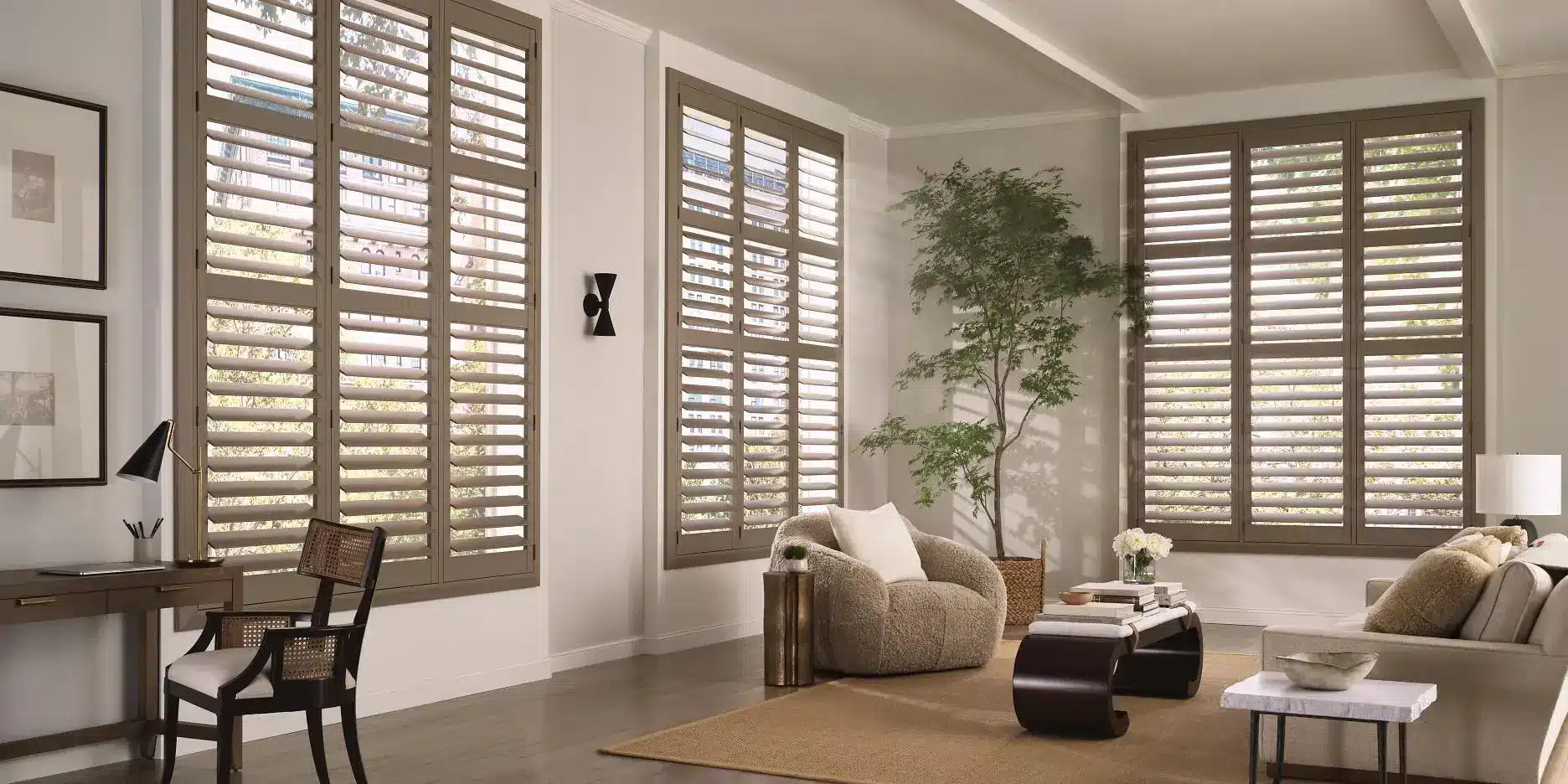
Custom interior shutters create an insulating air pocket between the shutter panel and your historic window glass. This dead-air space reduces heat transfer by up to 45% compared to uncovered windows (Source: ENERGY STAR Residential Windows Program, 2022). For your Downtown Wheaton Victorian, that means maintaining comfortable temperatures without cranking the thermostat—and without installing replacement windows that would destroy your home’s authenticity.
Preservation Compliance in DuPage County Historic Districts
If your home falls within a designated historic district, you understand the regulatory landscape. The Secretary of the Interior’s Standards for Rehabilitation—the benchmark used by Illinois Historic Preservation Agency reviewers—explicitly recommend reversible modifications that don’t damage original building fabric (Source: National Park Service Technical Preservation Services, 2023).
Custom interior shutters meet this standard perfectly because they:
- Mount inside the window casing without drilling into original frames
- Can be removed completely if future owners prefer different treatments
- Preserve exterior sight lines visible from the street
- Complement period-appropriate interior aesthetics
Wood Shutter Options for DuPage County Architecture
Matching Shutters to Your Home’s Era
The dominant architectural styles in Central DuPage—Victorian, Queen Anne, and Prairie—each call for distinct shutter configurations. A proper installation respects these differences rather than applying a one-size-fits-all approach.
| Architectural Style | Era | Recommended Shutter Style | Typical Louver Width |
|---|---|---|---|
| Victorian | 1870-1900 | Full-height plantation with center divider rail | 2.5-inch traditional |
| Queen Anne | 1880-1910 | Café-style lower panels with arched top sections | 3.5-inch mid-width |
| Prairie Style | 1900-1920 | Clean horizontal lines with minimal frame profiles | 4.5-inch contemporary |
Homes near Cantigny Park often feature the Prairie-style influence that became synonymous with Illinois architecture. Your shutters should echo those clean horizontal lines Frank Lloyd Wright popularized across the Chicago suburbs—not the ornate Victorian details that would clash with your home’s design philosophy.
Wood Species Selection for Midwest Climates
Central DuPage’s extreme temperature swings—from sub-zero winters to humid 95°F summers—demand wood species with proven dimensional stability. Your shutters will experience temperature differentials of 40-50°F between the window-facing side and room-facing side during winter cold snaps.
- Basswood: The industry standard for premium shutters; resists warping through temperature extremes; accepts paint and stain uniformly
- Poplar: Budget-friendly domestic hardwood; excellent stability; ideal for painted finishes matching your home’s original millwork
- White Oak: Period-authentic choice for pre-1900 homes; natural tannins provide rot resistance; works beautifully with clear finishes
Composite and vinyl alternatives may cost less upfront, but they lack the authentic appearance your historic Central DuPage home deserves—and they can yellow or become brittle after just 8-10 years of UV exposure (Source: American Window Covering Manufacturers Association, 2021).
The Custom Measurement Process for Historic Windows
Why Standard Sizing Fails in Pre-War Construction
Modern windows conform to standardized dimensions established by the American Architectural Manufacturers Association. Your 1895 Queen Anne? Those windows were built by hand, and no two openings measure exactly alike. Our measurement technicians routinely document 1/4-inch to 3/4-inch variations between windows in the same room of Central DuPage historic homes.
Each window receives individual documentation including:
- Width measurements at top, middle, and bottom of opening
- Height measurements at left, center, and right
- Depth available inside the window casing for mounting
- Square verification using diagonal measurements
- Obstruction mapping for hardware, locks, and cranks
Working Around Original Architectural Details
Your historic windows likely feature elements that mass-market shutters cannot accommodate: curved or arched tops on Queen Anne homes, multi-light configurations with original muntins, decorative interior casings with bullnose or ogee profiles. Custom fabrication addresses each element without modification to your original woodwork.
The DuPage County Historical Museum displays original window treatments from the region’s settlement era, demonstrating how interior shutters served both practical and decorative functions in our ancestors’ homes—a tradition worth preserving in your own historic residence.
Installation Without Damaging Original Window Frames
Reversible Mounting Systems
Preservation-compliant installation means your grandchildren could remove these shutters decades from now with zero evidence they were ever installed. We achieve this through mounting systems that attach to the window casing (the surrounding frame) rather than the window sash or original jamb.
For Central DuPage homes with particularly delicate or irreplaceable casings, we offer friction-fit frame systems that wedge into the opening without any fasteners whatsoever. While this approach adds approximately 15% to your installation cost, it provides absolute peace of mind for museum-quality preservation.
Addressing Out-of-Square Openings
After 120+ years of settling, your Downtown Wheaton Victorian’s windows are almost certainly out of square. Our fabrication process compensates by cutting shutter frames to match your actual opening geometry rather than forcing rectangular shutters into parallelogram-shaped spaces. The result: panels that close completely without gaps, maximizing both your insulation performance and your aesthetic satisfaction.
Cost Considerations for Central DuPage Homeowners
Custom wood shutters for historic homes represent a meaningful investment. However, Central DuPage homeowners consistently report that quality shutters deliver value that stock alternatives cannot match.
Expect to budget $45-85 per square foot for premium custom wood shutters with proper historic detailing—approximately 40% higher than big-box plantation shutters designed for new construction (Source: National Association of Home Builders Remodeling Cost Guide, 2024). This premium reflects:
- Individual measurement and CAD modeling for each window
- Solid hardwood construction versus hollow-core or composite panels
- Period-appropriate details like mortise-and-tenon joinery
- Custom paint matching to your historic millwork colors
- Preservation-compliant installation by trained technicians
ComEd customers in Central DuPage report average heating cost reductions of 12-18% after installing quality interior shutters throughout their homes—savings that compound every winter season your shutters remain in service.
Get a free quote tailored to your specific historic home’s requirements.
Why Local Expertise Matters for Preservation Projects
Your historic Central DuPage home isn’t a spec house. The craftsmen who built it understood local materials, local weather, and local aesthetic traditions. Your window treatments deserve the same localized expertise.
A shutter provider familiar with Central DuPage brings specific advantages:
- Experience with common regional architectural variations
- Relationships with local preservation organizations
- Understanding of Illinois Historic Preservation Agency requirements
- Familiarity with common issues in pre-1920 Central DuPage construction
When you’re protecting a home that has stood through 130 Midwest winters, that local knowledge makes the difference between a good installation and a great one.
Schedule your free in-home consultation today and discover how custom shutters can honor your historic home’s character while solving your energy efficiency challenges. Our measurement technicians serve the entire Central DuPage area, including the Downtown Wheaton Historic District, Naperville Historic District, and surrounding communities.
Frequently Asked Questions
Do custom shutters qualify for historic preservation tax credits in Illinois?
Interior shutters alone typically do not qualify for Illinois Historic Preservation Tax Credits, which focus on substantial rehabilitation projects exceeding $5,000 in qualified expenses. However, if your shutter installation is part of a larger certified rehabilitation project that includes window restoration, the entire project may qualify for a 25% state tax credit. Consult with the Illinois Historic Preservation Agency before beginning work to ensure proper documentation and certification.
How long do custom wood shutters last in Central DuPage’s extreme climate?
Quality basswood or poplar shutters with proper finishing typically last 30-50 years in Central DuPage’s climate when maintained appropriately. The key longevity factors include using kiln-dried lumber with 6-8% moisture content, applying UV-resistant finishes, and ensuring proper clearance from window glass to prevent condensation damage during winter months. We recommend annual inspection of hinges and touch-up of any paint wear every 5-7 years.
Can custom shutters be installed on windows with original wavy glass without replacement?
Absolutely—preserving original wavy or cylinder glass is one of the primary advantages of interior shutters over replacement window systems. Custom shutters mount to the surrounding casing rather than the glass or sash, leaving your irreplaceable historic glass completely untouched. The shutter frame is sized with appropriate clearance to accommodate slight irregularities in antique glass surfaces without contact or pressure.
What is the typical lead time for custom historic home shutters?
From initial measurement to completed installation, expect 6-10 weeks for custom historic home shutters in Central DuPage. This timeline includes precision measurement (1-2 hours on-site), CAD modeling and client approval (1 week), fabrication at our regional millwork facility (4-6 weeks), and professional installation (1-2 days depending on project scope). Rush production is available for an additional 20% premium when scheduling allows.