Your covered porch in Naperville Historic District survived another winter of ice storms and sub-zero wind chills. Now summer humidity is creeping in, and that beautiful wraparound porch feels more like a fishbowl than a private retreat. For Central DuPage homeowners with outdoor living spaces, finding shade solutions that can handle both extremes—without looking like industrial tarps—has been nearly impossible until now.
Outdoor roman shades offer the elegant aesthetic you expect from your craftsman or colonial revival home while delivering the weather resistance Illinois demands. But not all outdoor shades are created equal, and Central DuPage’s specific climate challenges require materials and construction methods that generic patio covers simply cannot match.
Why Central DuPage Porches Demand Specialized Outdoor Shades
The DuPage County microclimate creates a perfect storm for outdoor fabric failure. Winter temperatures regularly plunge below zero while summer humidity averages 70-80% throughout July and August (Source: National Weather Service Chicago, 2023). This annual 100+ degree temperature swing destroys standard outdoor fabrics within two to three seasons.
The Freeze-Thaw Fabric Killer
Standard outdoor shades sold at big-box retailers use polyester blends designed for mild climates. When moisture penetrates these fabrics and freezes, ice crystals expand within the fiber structure, creating microscopic tears. After just three Central DuPage winters, you will notice fading, brittleness, and eventual cracking. Homeowners in Downtown Wheaton and Glen Ellyn Village have learned this expensive lesson repeatedly.
Solution-dyed acrylic fabrics—the same technology used in marine applications—resist this degradation. The color penetrates entirely through each fiber rather than sitting on the surface, which means your outdoor roman shades maintain their appearance even after years of Illinois weather exposure. Independent testing shows solution-dyed acrylics retain 98% of their original strength after 1,500 hours of UV exposure (Source: American Association of Textile Chemists and Colorists, 2022).
Humidity and Mold Resistance for Illinois Summers
That July morning when you find green mold creeping across your patio shades is not a maintenance failure—it is a material failure. Central DuPage summers combine sustained humidity with temperature fluctuations that create constant condensation on outdoor fabrics. Without antimicrobial treatment integrated at the fiber level, mold colonies establish themselves within weeks.
High-performance outdoor roman shades incorporate mold-resistant treatments that remain effective for the product’s entire lifespan. Unlike spray-on treatments that wash away after one season, integrated antimicrobial protection keeps your shades looking fresh whether you are hosting a summer cookout or enjoying fall colors at Morton Arboretum just minutes away.
Matching Outdoor Roman Shades to Central DuPage Architecture
Central DuPage’s architectural character sets it apart from generic suburban developments. The Naperville Historic District features authentic colonial revivals with symmetrical facades and shuttered windows. Glen Ellyn’s tree-lined streets showcase craftsman bungalows with signature tapered columns and deep eave overhangs. Your outdoor shades should complement this heritage, not clash with it.
Colonial Revival Porch Considerations
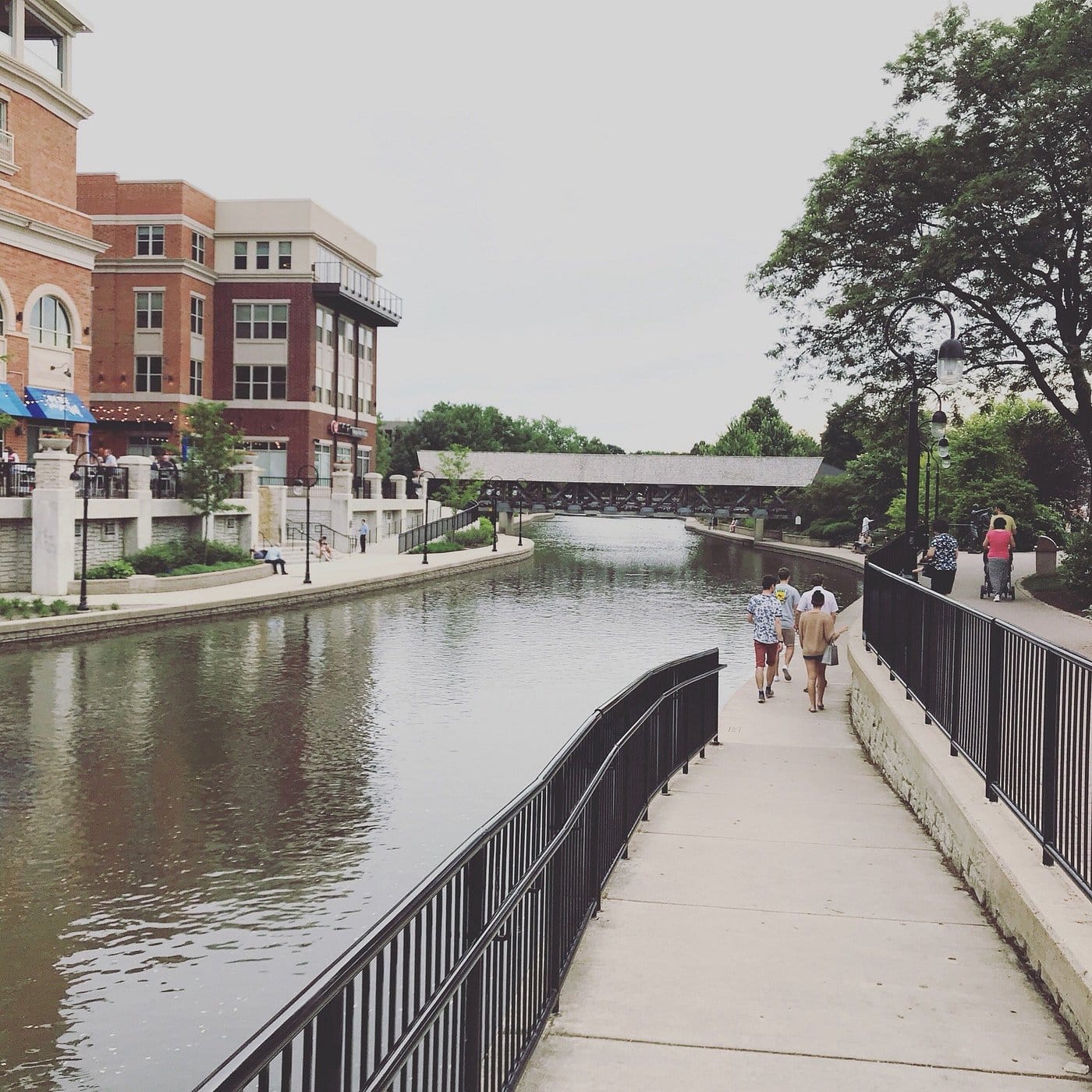
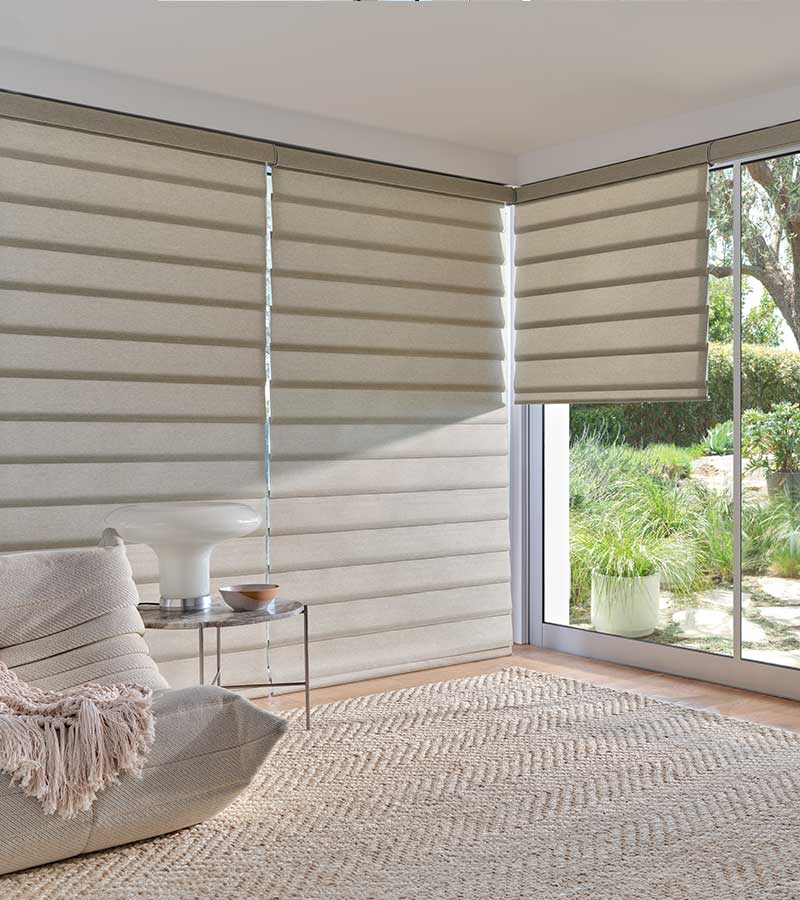
Colonial revival homes demand formal balance. Outdoor roman shades work exceptionally well here because their flat-fold design mimics the structured lines of traditional window treatments. For wraparound porches common in historic Naperville neighborhoods near the downtown Riverwalk, consider coordinating shade colors with existing shutters or trim work. Classic hunter greens, navy blues, and cream tones maintain architectural authenticity while providing modern performance.
Craftsman Home Integration
Craftsman porches emphasize horizontal lines and natural materials. Outdoor roman shades in earth tones—terracotta, sage, warm browns—complement the arts-and-crafts aesthetic. The cascading folds of roman shades echo the layered look of craftsman architecture, creating visual harmony between your outdoor living space and the home’s original design intent. Homeowners near Cantigny Park often draw color inspiration from the gardens’ seasonal palettes.
| Architectural Style | Recommended Shade Colors | Fold Style | Hardware Finish |
|---|---|---|---|
| Colonial Revival | Navy, Hunter Green, Cream | Flat Fold | Oil-Rubbed Bronze |
| Craftsman | Terracotta, Sage, Warm Brown | Soft Fold | Antique Brass |
| Traditional Ranch | Tan, Charcoal, Sandstone | Classic Fold | Brushed Nickel |
Performance Features That Matter for Central DuPage Installations
Outdoor roman shades differ dramatically from their indoor cousins. The mechanisms, mounting systems, and fabric specifications must all account for wind loads, moisture exposure, and temperature extremes that indoor treatments never face.
Wind-Rated Hardware for Open Porch Installations
DuPage County experiences average wind speeds of 10-12 mph with gusts regularly exceeding 40 mph during spring storms (Source: Illinois State Climatologist Office, 2023). Standard indoor roman shade hardware will fail within months under these conditions. Outdoor-rated systems use:
- Marine-grade stainless steel components that resist corrosion from humidity and road salt exposure
- Reinforced mounting brackets with four-point anchoring systems
- Wind-lock mechanisms that secure shades at any height position
- UV-stabilized lift cords rated for 50,000+ operating cycles
Privacy Ratings and Light Control Options
Outdoor privacy shades serve different purposes depending on your porch orientation and neighborhood density. Homes in established Central DuPage neighborhoods often sit on smaller lots where porch-to-porch sightlines create privacy concerns. Understanding opacity ratings helps you select the right balance:
- Sheer (10-30% opacity) – Filters light, minimal privacy, maintains views
- Light filtering (40-60% opacity) – Balanced privacy with natural light
- Room darkening (70-90% opacity) – Strong privacy, reduces afternoon heat gain
- Blackout (95%+ opacity) – Maximum privacy, ideal for west-facing porches
Most Central DuPage homeowners select light-filtering options that provide daytime privacy while preserving the connection to their landscaping and neighborhood character.
Energy Efficiency and Your ComEd Bill
Covered porches with extensive glass or screen walls transfer significant heat into adjacent interior spaces. The U.S. Department of Energy reports that properly installed exterior shading devices can reduce solar heat gain by up to 77% compared to unshaded glazing (Source: U.S. Department of Energy, 2022). For Central DuPage homes served by ComEd, this translates directly to lower summer cooling costs.
Installing outdoor roman shades on a west-facing porch can reduce interior temperatures in adjacent rooms by 8-15 degrees during peak afternoon hours. Combined with Nicor Gas heating efficiency in winter—where closed shades add an insulating air pocket—your outdoor living space investment pays dividends year-round.
Professional Installation vs. DIY for Central DuPage Conditions
Big-box retailers sell DIY outdoor shade kits, but Central DuPage’s climate demands professional installation for several critical reasons.
Structural Assessment Requirements
Older homes in Downtown Wheaton and the Naperville Historic District often have porch ceilings and support structures that were not designed for modern shade loads. Wind forces on a 6-foot-wide roman shade can exceed 50 pounds per square foot during storms. Professional installers assess:
- Ceiling joist locations and load capacity
- Column and post structural integrity
- Existing electrical routing for motorized options
- Proper drainage clearances for fabric edges
Custom Measurement for Irregular Openings
Historic porch openings rarely feature perfectly square corners. Settling over decades creates variations that off-the-shelf products cannot accommodate. Professional measurement accounts for these irregularities, ensuring your outdoor roman shades operate smoothly and seal properly against weather intrusion.
Why Central DuPage Homeowners Trust Local Installation: Our installers understand the specific challenges of homes built in the 1920s through 1950s that dominate Glen Ellyn Village and historic Naperville. We have completed over 200 outdoor shade installations in DuPage County, with materials specifically selected for Illinois freeze-thaw cycles and humidity levels.
Investment Ranges and Value Considerations
Outdoor roman shades represent a higher investment than standard indoor window treatments, but the value proposition for Central DuPage homeowners is compelling. Quality outdoor shades extend your usable living space by four to six months annually—from early spring through late fall—effectively adding functional square footage to your home.
According to the National Association of Home Builders, outdoor living space improvements return 70-80% of their investment at resale (Source: National Association of Home Builders, 2023). For affluent Central DuPage neighborhoods where covered porches are selling points, professionally installed outdoor roman shades enhance both daily enjoyment and long-term property value.
Budget-conscious homeowners should consider starting with the most-used porch section rather than attempting to shade every opening simultaneously. A phased approach spreads your investment while allowing you to experience the quality difference before committing to a full installation.
Ready to transform your Central DuPage porch into a private outdoor retreat? Schedule your free outdoor roman shade consultation today and discover options designed specifically for Illinois weather conditions.
Frequently Asked Questions
How long do outdoor roman shades last in Central DuPage weather?
With proper materials and installation, high-quality outdoor roman shades last 10-15 years in Central DuPage conditions. Solution-dyed acrylic fabrics with integrated UV stabilizers maintain color and structural integrity through repeated freeze-thaw cycles that would destroy standard polyester within three years.
Can outdoor roman shades be motorized for convenience?
Yes, motorized options are available and particularly popular for hard-to-reach installations or homeowners who want smartphone control. Battery-powered motors eliminate the need for electrical work on older porches, while hardwired systems integrate with home automation platforms.
Do outdoor roman shades work on screened porches?
Outdoor roman shades mount inside or outside existing screen frames depending on your privacy and aesthetic goals. Interior mounting preserves the screen’s bug protection while adding privacy. Exterior mounting creates a more dramatic visual impact and provides additional weather protection for the screens themselves.
Stop settling for generic patio covers that fail after two seasons. Central DuPage homeowners deserve outdoor roman shades engineered for your specific climate, matched to your home’s architectural character, and backed by local installation expertise. Get a free quote for your covered porch project and join hundreds of Naperville, Wheaton, and Glen Ellyn families enjoying elegant outdoor privacy year-round.
Frequently Asked Questions
What maintenance do outdoor roman shades require in Illinois winters?
Before the first freeze, brush off debris and ensure fabrics are completely dry. Store retracted shades in the raised position during heavy snow events to prevent ice accumulation on the fabric folds. Spring cleaning requires only mild soap and water applied with a soft brush.
Are permits required for outdoor shade installation in DuPage County?
Most outdoor roman shade installations do not require permits in Naperville, Wheaton, or Glen Ellyn because they attach to existing structures without modification. However, motorized installations requiring new electrical circuits may need electrical permits depending on your municipality.
How do outdoor roman shades compare to outdoor roller shades for privacy?
Roman shades create a softer, more traditional aesthetic with their cascading folds, making them ideal for historic homes. Roller shades offer a sleeker modern look and slightly faster operation. Both provide equivalent privacy and weather protection when using comparable fabric grades.