Your ComEd bill arrives in January, and the number makes you wince. That 1970s colonial in Glen Ellyn with its original single-pane windows is hemorrhaging heat into the Midwest winter. By July, the same windows turn your Wheaton living room into a greenhouse, forcing your AC to run constantly. This is the Central DuPage energy dilemma—and cellular shades offer a solution engineered specifically for our extreme temperature swings.
Why Central DuPage Homes Lose So Much Energy Through Windows
The average Central DuPage home loses 25-30% of its heating and cooling energy through windows (Source: U.S. Department of Energy, 2023). That percentage climbs dramatically in the 1960s-80s colonials that dominate neighborhoods from Lombard to Naperville. These homes were built when energy efficiency meant little more than storm windows.
The ComEd and Nicor Gas Reality
Central DuPage homeowners pay some of the highest utility rates in Illinois. ComEd residential rates increased 18% between 2020 and 2024 (Source: Illinois Commerce Commission, 2024). Meanwhile, Nicor Gas heating costs spike every winter when temperatures around Cantigny Park and the Morton Arboretum plunge below zero. A family in a typical 2,400-square-foot home spends $2,800-$3,600 annually on heating and cooling (Source: U.S. Energy Information Administration, 2023).
How Windows Fail Your Home
Windows account for the largest thermal weak point in your building envelope. Even newer construction subdivisions in Central DuPage often feature builder-grade windows with R-values of just 2-3. Compare that to your insulated walls at R-13 to R-19. Every window becomes a thermal bridge, transferring precious heated or cooled air directly outside. Cellular shades add a critical insulation layer that standard blinds and curtains simply cannot match.
How Cellular Shades Deliver Year-Round Savings
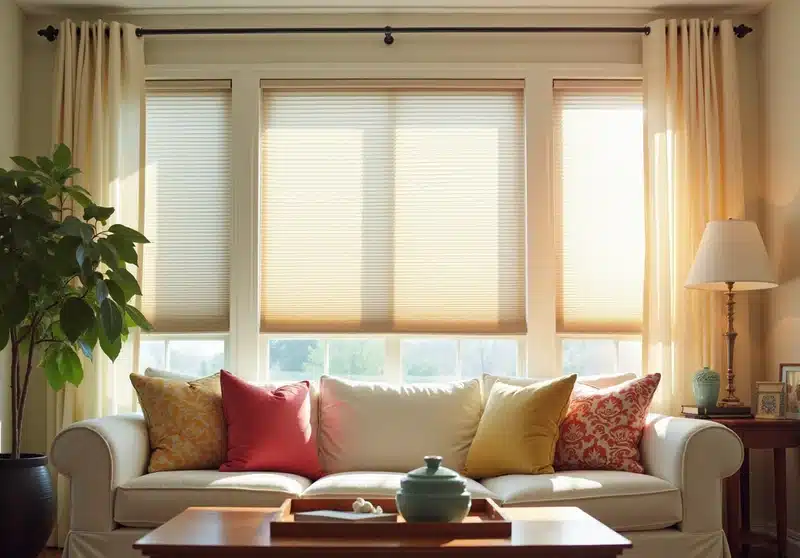
Cellular shades—also called honeycomb shades—feature a unique construction of air pockets that trap temperature. Unlike flat blinds or fabric curtains, this honeycomb structure creates dead air space, which is one of nature’s best insulators.
The Science of Honeycomb Insulation
Single-cell cellular shades can reduce heat loss through windows by up to 40% (Source: U.S. Department of Energy, 2022). Double-cell and triple-cell designs increase that efficiency further, achieving R-values between 2 and 5 depending on configuration. For Central DuPage homes, this means your Nicor Gas furnace runs fewer cycles during January cold snaps, and your AC takes a break during August heat waves.
| Cell Configuration | Approximate R-Value | Best Application |
|---|---|---|
| Single Cell | R-2 | Moderate climates, budget-conscious |
| Double Cell | R-3 to R-4 | Central DuPage winter/summer extremes |
| Triple Cell | R-4 to R-5 | Historic homes with single-pane glass |
Summer Cooling Protection
When summer temperatures hit 95°F near Downtown Wheaton, your south and west-facing windows become solar ovens. Cellular shades with reflective backing can block up to 80% of solar heat gain (Source: ENERGY STAR, 2023). Your air conditioning works less, your rooms stay cooler, and your ComEd summer bills drop noticeably. Homeowners in Naperville who install cellular shades on sun-exposed windows report immediate comfort improvements.
Matching Cellular Shades to Central DuPage Architecture
Your window treatments should complement your home’s character while maximizing efficiency. Central DuPage offers diverse architectural styles, and energy efficient window treatments must adapt accordingly.
1960s-80s Colonials and Split-Levels
These homes dominate Glen Ellyn, Wheaton, and Lombard neighborhoods. They typically feature standard-sized double-hung windows that accept cellular shades perfectly. The clean lines of honeycomb shades complement the traditional aesthetic without overwhelming original woodwork. For these homes, we recommend double-cell shades in neutral tones that blend with existing trim colors.
Newer Construction Subdivisions
Modern homes in Naperville and surrounding Central DuPage developments often include oversized windows, transoms, and specialty shapes. Cellular shades offer custom sizing for these applications, including arched and angled windows that standard blinds cannot cover. Motorized options integrate with smart home systems popular in these properties.
Historic Downtown Properties
The charming historic homes near Downtown Wheaton and the tree-lined streets around Morton Arboretum present unique challenges. Original windows often feature non-standard dimensions and irreplaceable character. Insulating shades provide efficiency without requiring window replacement, preserving architectural integrity while dramatically improving thermal performance.
Important Consideration: Many Central DuPage historic homes qualify for property tax freezes under the Illinois Historic Preservation Tax Credit. Adding cellular shades preserves original windows while still achieving modern energy efficiency—protecting both your home’s character and your wallet.
What Central DuPage Homeowners Experience
Local families across DuPage County have discovered the practical benefits of upgrading to cellular shades. Here are specific experiences from homeowners who made the switch:
Why Central DuPage Homeowners Trust Us
- Lisa M., Glen Ellyn: After installing double-cell honeycomb shades on 12 windows in her 1978 colonial, she tracked her Nicor Gas usage and found a 19% reduction in winter heating costs compared to the previous year with identical weather patterns.
- David R., Naperville: His south-facing family room reached 85°F on summer afternoons despite running the AC constantly. After installing solar-reflective cellular shades, the room temperature dropped to a consistent 74°F, cutting his July ComEd bill by $67.
- Jennifer and Mark T., Wheaton: Their 1920s home near Downtown Wheaton had original single-pane windows they refused to replace. Triple-cell cellular shades reduced their combined annual energy spending by $412 while preserving the home’s historic character.
Selecting the Right Cellular Shades for Your Home
Not all honeycomb shades perform equally. Your Central DuPage home has specific requirements based on window orientation, existing glass type, and lifestyle preferences.
Light Filtering vs. Room Darkening
Light-filtering cellular shades allow diffused natural light while providing privacy and insulation. Room-darkening options add an opaque liner for bedrooms or media rooms. In Central DuPage, we often recommend light-filtering for living areas and room-darkening for bedrooms facing street lights in neighborhoods like Lombard and Glen Ellyn.
Cordless and Motorized Options
Modern cellular shades eliminate dangling cords—a safety requirement if you have children or pets. Motorized systems allow smartphone or voice control, perfect for hard-to-reach windows in two-story foyers common in Naperville new construction. Studies show motorized shades used on schedules can improve energy savings by an additional 10-15% because they’re actually used consistently (Source: Hunter Douglas Energy Efficiency Research, 2022).
Color and Style Coordination
Cellular shades are available in hundreds of colors and textures. For the Hometown Value aesthetic prevalent in Central DuPage, we find neutral whites, creams, and soft grays remain most popular. These choices complement both traditional colonials and contemporary designs while maximizing light reflection in your space.
- Choose lighter colors for maximum light diffusion
- Select cellular sizes proportionate to your window dimensions
- Consider top-down/bottom-up operation for privacy with natural light
- Add side channels for enhanced insulation on extremely drafty windows
Your Next Step: Free In-Home Consultation
Every Central DuPage home presents unique window challenges. That colonial in Wheaton with 14 windows differs completely from the open-concept Naperville new build with floor-to-ceiling glass. A professional in-home measurement ensures your cellular shades fit perfectly and perform optimally.
During your consultation, we’ll assess each window’s sun exposure, measure precisely for custom fabrication, discuss your aesthetic preferences, and calculate projected energy savings based on your specific home. There’s no obligation—just honest guidance from local window treatment experts who understand what Central DuPage homeowners need.
Schedule your free in-home cellular shade consultation in Central DuPage today. Whether you’re near Cantigny Park, walking distance from the Morton Arboretum, or anywhere across DuPage County, we serve your neighborhood with expert installation and lasting quality. Stop watching your ComEd and Nicor dollars fly out the window—and start enjoying a more comfortable, efficient home.
Frequently Asked Questions
How long does professional cellular shade installation take in Central DuPage?
Most Central DuPage installations—covering 8-15 windows—complete in a single 3-4 hour appointment. Our installers arrive with pre-cut custom shades based on your consultation measurements, mount brackets precisely, and test every shade’s operation before leaving. Larger homes or motorized installations may require a second visit for wiring integration.
Do cellular shades work with existing smart home systems popular in Naperville?
Yes. Motorized cellular shades integrate seamlessly with Alexa, Google Home, Apple HomeKit, and dedicated smart hubs common in Naperville and newer Central DuPage construction. You can program schedules that automatically lower shades during peak sun hours and raise them when you return home—maximizing both energy savings and convenience without lifting a finger.
Can I install cellular shades myself, or is professional installation recommended?
While basic inside-mount cellular shades can be DIY projects, professional installation ensures precise fit and optimal energy performance. Improperly mounted shades leave gaps that allow air leakage, reducing efficiency by 20-40%. For Central DuPage homes with non-standard windows, specialty shapes, or motorized systems, professional installation pays for itself through better performance and warranty protection.
What warranty coverage should I expect on quality cellular shades?
Premium cellular shades typically include lifetime warranties on mechanical components and 5-7 year coverage on fabrics. Professional installation adds labor warranties ranging from 1-3 years. When evaluating options for your Central DuPage home, compare warranty terms carefully—quality manufacturers stand behind their products because they’re engineered to perform for decades.